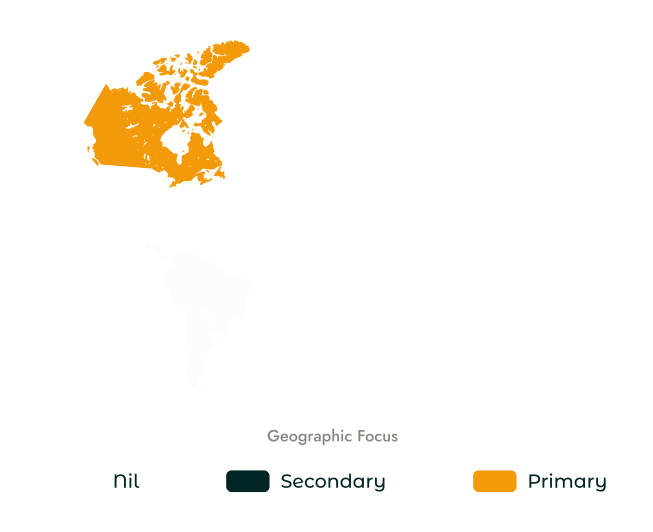
Canada’s fermented beverage industry stands at a pivotal crossroads. Influenced by evolving consumer demands, rapid innovation, and global economic pressures, the sector is both grappling with internal challenges and capitalising on international opportunities. The complexity of this landscape reflects the broader shifts in global food and drink industries, where wellness, sustainability, and diversification are no longer trends—they are expectations.
Production and Sales Trends
Recent forecasts have highlighted a concerning trend: the production of fermented beverages in Canada is expected to decline steadily from 2024 through 2028. This downward movement is not merely a statistical dip but a signal of deeper shifts within the market. As ReportLinker notes, this reduction in output can be attributed to several converging factors, including market saturation and the shifting preferences of an increasingly health-conscious public. It is no longer sufficient to produce traditional staples; today’s consumers demand innovation, function, and ethical provenance.
Despite this domestic headwind, Canada’s position in the global fermented beverage market is strengthening. Between November 2023 and November 2024, exports of “Other Fermented Beverages” surged by C$2.18 million—a robust 14.1% increase—bringing the total to C$17.6 million. This figure, reported by The Observatory of Economic Complexity, underscores the international appetite for Canadian-made products and the country’s potential to become a leading exporter in the space. These export gains suggest that while the local market may be contracting slightly, international markets remain a viable—and lucrative—avenue for growth.
Consumer Preferences and Behaviour
At the heart of the market’s transformation is the Canadian consumer, whose preferences have evolved dramatically in recent years. Wellness, personalisation, and conscious consumption have become key drivers in beverage choice.
Health-Conscious Choices
One of the most prominent shifts is the increasing demand for drinks that offer health benefits. Consumers are now more likely to select beverages based on their perceived functional advantages, such as digestive health or immune support. As Future Market Insights observes, this shift is evident in the rising popularity of kombucha, kefir, and other probiotic-rich options. These products, once niche, are now mainstream shelf staples, reflecting a growing prioritisation of gut health across all demographics.
Reduced Alcohol Consumption
In tandem with health consciousness is a nationwide trend towards reduced alcohol intake. Sparkling waters, botanical seltzers, and low-alcohol fermented drinks are enjoying a spike in popularity. Simon-Kucher highlights that these beverages appeal not only to those pursuing sobriety or moderation but also to younger consumers for whom wellness is an integral part of lifestyle identity. The result is a dynamic redefinition of social drinking, one that accommodates both taste and health considerations.
Flavour Innovations
This health-driven evolution does not come at the cost of pleasure. Flavour continues to be a central motivator for consumers, with an increasing appetite for novelty. New flavour profiles—ranging from floral infusions to exotic fruits—are winning over younger palates. As evidenced by recent market developments, today’s consumers want to be surprised. Fermented beverages that deliver unique sensory experiences are more likely to succeed, particularly when paired with clean ingredients and transparency around sourcing.
Product Innovation
Innovation is not merely a buzzword in the fermented beverage sector—it is the engine of differentiation and growth. Brands are investing heavily in new product development, with a focus on functional ingredients, sustainability, and technological advancement.
Functional Ingredients
Modern consumers want their beverages to work for them. The inclusion of probiotics, adaptogens, CBD, and other functional compounds is becoming increasingly common. As reported by FlavorSum, this trend speaks to the rise of beverages that serve specific health needs—be it stress relief, cognitive enhancement, or immunity. Fermented beverages are uniquely positioned to carry these ingredients, leveraging the natural benefits of fermentation alongside targeted wellness claims.
Sustainable Packaging
Environmental impact is another key concern for today’s buyer. Packaging innovations are playing a significant role in defining brand loyalty. More than ever, companies are moving away from single-use plastics and embracing recyclable, biodegradable, or reusable formats. These initiatives are not simply marketing gestures—they are becoming central to brand identity, and essential for consumers who expect businesses to take a proactive role in climate responsibility.
Technological Advancements
Technology is revolutionising fermentation itself. Modern methods, from precision fermentation to AI-optimised brewing techniques, are enabling producers to create products that are not only healthier and more consistent, but also more scalable. This allows for rapid prototyping and a faster response to emerging consumer demands. As highlighted by FlavorSum, these advancements are lowering production costs while simultaneously expanding the palette of what’s possible within the beverage category.
Market Growth and Forecasts
Despite some domestic production concerns, the overall growth trajectory of fermented beverages—both globally and within Canada—remains strong.
Global Market Projections
According to Global Market Insights Inc., the global fermented beverages market was valued at an astonishing USD 951.2 billion in 2024 and is forecasted to reach USD 1.7 trillion by 2034. This 6.2% compound annual growth rate (CAGR) reflects not just increased volume, but a broader diversification of offerings and entry into new consumer segments. Canada’s place within this ecosystem is both as a producer and an innovator.
Plant-Based Alternatives
Plant-based innovation continues to be a key area of expansion. Fermented drinks made from non-dairy sources—such as oat, coconut, and soy—are becoming increasingly popular among Canadian consumers. As reported by Straits Research, the value of this segment is projected to more than double, from USD 22.1 million in 2024 to USD 47.3 million by 2032. This 10.0% CAGR speaks to a powerful convergence of two movements: plant-based living and fermented functionality.
Functional Beverages
The functional beverage market in Canada alone is projected to exceed USD 1.67 billion by the 2025–2030 period. This, according to Bona Fide Research, is largely due to evolving consumer desires for drinks that contribute meaningfully to health goals. From improved mood to immune defence, these beverages are becoming part of daily wellness routines, akin to supplements or vitamins.
Key Challenges and Opportunities
The path ahead is not without obstacles. However, where there are challenges, there are also opportunities for those agile enough to adapt.
Challenges
Supply chain instability remains a persistent issue, especially in the wake of global disruptions that have affected the availability of raw materials and complicated international logistics. Additionally, regulatory hurdles—especially those concerning new ingredients or health claims—can slow down innovation. Navigating these complexities requires both patience and strategic foresight.
Opportunities
Conversely, international expansion offers a promising avenue. As shown by export growth, Canadian producers are well-positioned to meet the rising global demand for fermented beverages. Moreover, the growing interest in health-specific products—particularly those targeting gut health, mental wellness, and immunity—presents a wide-open space for niche development. Companies that embrace this challenge can not only weather market turbulence but thrive within it.
Actionable Recommendations
To succeed in this evolving landscape, Canadian producers should consider the following strategies:
- Invest in R&D: Allocate resources towards product development that focuses on health benefits and sensory innovation. Functional ingredients and unique flavour profiles are key to standing out.
- Enhance Sustainability: Build sustainability into every aspect of the supply chain—from ingredient sourcing to packaging—to meet the values of today’s ethically minded consumers.
- Expand Market Reach: Leverage Canada’s export potential by exploring new international markets and embracing digital distribution platforms such as e-commerce, which allow for greater brand visibility and consumer access.
- Engage with Regulatory Bodies: Proactively collaborate with regulatory agencies to streamline approval processes and ensure compliance for emerging product categories. This can reduce time to market and foster innovation.
In Summary
Canada’s fermented beverage sector is undergoing a bold reimagining. Shaped by innovation, wellness, and environmental consciousness, the market is increasingly aligned with the demands of tomorrow’s consumer. While domestic production trends suggest a moment of recalibration, export growth and product innovation paint a promising picture for future expansion. By embracing change and prioritising agility, Canadian brands can position themselves not only as market players but as global leaders in the new era of fermented beverages.
Methodology
This report was constructed through a synthesis of authoritative industry data, trend analysis, and export statistics sourced from leading market research firms and economic observatories. By integrating consumer behaviour insights with production forecasts and innovation trends, the report offers a holistic view of the Canadian fermented beverage sector. This approach ensures both strategic relevance and data-driven credibility. The structure was designed to inform stakeholders, support decision-making, and identify actionable opportunities.
Custom Reports
For further inquiries or custom reports, please contact: richard@bevera.ca or daniel@bevera.ca